
When dusk settles, storefronts with carefully designed lighted signs stand out like beacons, guiding potential customers through dimly lit streets. Night-time visibility isn’t just about aesthetics—it’s a critical driver of foot traffic, brand recall, and sales growth. In this blog, I’ll show you how strategically designed and installed illuminated outdoor signs can convert evening passersby into loyal patrons.
Understanding Lighted Signs: Beyond the Glow
Lighted signs encompass a spectrum of technologies—from classic neon to advanced LED modules. These luminous beacons leverage controlled brightness, color temperature, and placement to ensure your business message remains clear, even in low-light environments.
Types of Illuminated Outdoor Signs
Each lighted signage solution brings unique advantages. The table below breaks down common options:
| Sign Type | Illumination Method | Visibility Range | Best Use Case |
| Back-Lit Signage | LEDs behind translucent face | Up to 100 ft | Retail storefronts, shopping centers |
| Front-Lit Signage | Spotlights facing sign | Up to 75 ft | Restaurant façades |
| Halo-Lit Channel Letters | LEDs behind raised letters | Up to 120 ft | Premium brands, luxury hotels |
| LED Business Signs | Surface-mounted LEDs | Up to 150 ft | High-traffic streets, highways |
| Neon & LED Neon Signs | Gas-filled tubes / flexible LED strips | Up to 60 ft | Bars, cafés, boutique shops |
LED Business Signs: Efficiency Meets Impact
Modern LED modules have transformed exterior signage. With lifespans exceeding 50,000 hours and energy consumption up to 80% lower than fluorescent or neon alternatives, LED business signs deliver vibrant color rendering (high CRI), dynamic dimming controls, and programmable animations—all while keeping operating costs minimal.
Back-Lit Signage: Even, Vibrant Glow
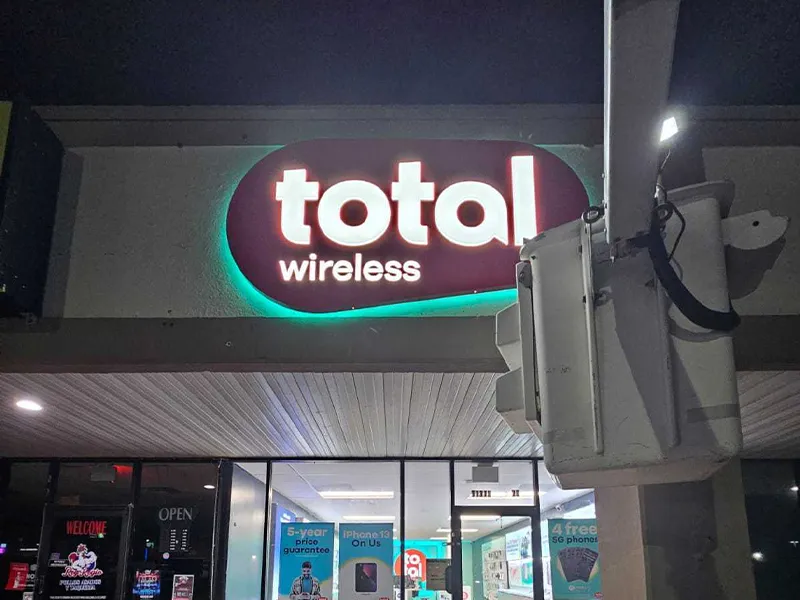
By embedding LED strips behind an opal or acrylic face, back-lit signage ensures your graphics and logo glow uniformly. This uniformity enhances legibility and draws attention without harsh hotspots, making it ideal for multi-location franchises seeking brand consistency.
Designing for Night: Key Considerations
Proper design maximizes the ROI of illuminated outdoor signs. Every decision—from brightness levels to mounting height—affects how easily pedestrians and motorists can read your message.
Brightness and Visibility: Nits & Lumens
- Lumens measure total light output; higher lumens ensure greater brightness.
- Nits gauge surface brightness (1 nit = 1 cd/m²); for direct sunlight readability, aim for 5,000–7,000 nits.
Balancing lumens and nits prevents glare while maintaining high-contrast readability. For pedestrian areas, 1,500–3,000 nits suffice; for roadside billboards under direct sunlight, 7,000 nits or more may be necessary.
Weatherproofing and IP Ratings
Outdoor signs must resist moisture, dust, and temperature extremes. Components should carry an IP65 or higher rating, indicating full protection against dust ingress and low-pressure water jets. For coastal or high-humidity regions, stainless steel hardware and UV-stabilized acrylic faces extend service life.
Materials and Installation Techniques
- Acrylic Faces offer smooth illumination but scratch more easily than polycarbonate.
- Polycarbonate panels withstand impact but can yellow under strong UV exposure.
- Aluminum Cabinets provide structural rigidity with corrosion-resistant finishes.
Whether mounting to a building façade or suspending on poles, ensure proper anchoring and ventilation to avoid heat buildup around LED drivers.
Strategic Placement and Content
A lighted sign’s physical location and message design directly influence the customer journey. Smart placement near entry points, intersections, or pedestrian walkways drives walk-bys.
Foot Traffic Analysis: Converting Walk-Bys to Customers
By studying heat maps of pedestrian flow, you can position your sign to intercept high-traffic zones. Consider eye-level placement (6–8 ft off the ground) for walkways and higher mounts (10–15 ft) when targeting vehicular traffic. Integrate concise headlines—no more than 5 words—and call-to-action prompts like “Open Late” or “Order In-App” to spur immediate response.
Typography and Color Psychology
- Use bold, sans-serif fonts for maximum legibility.
- Contrast background and text colors by at least 70% (e.g., white on dark blue).
- Employ warm hues (reds, oranges) to create a sense of urgency; cooler tones (blues, greens) convey trust and stability.
Cost vs. ROI: Investing in Back-Lit Signage
While the initial outlay for high-quality illuminated signage can be substantial, the long-term gains in brand recall and incremental sales often justify the expense.
| Investment Element | Typical Cost Range | Expected Payback |
| Back-Lit Acrylic Sign | $3,000–$6,000 | 6–12 months |
| LED Neon Custom Sign | $1,500–$4,000 | 4–8 months |
| Halo-Lit Channel Letters | $5,000–$10,000 | 12–18 months |
| Installation & Permits | $500–$1,500 | N/A |
Key factors influencing payback time include sign location, local foot traffic volumes, and complementary marketing efforts. When coupled with social media promotion—encouraging patrons to snap photos of an Instagram-worthy sign—you amplify both physical and digital engagement.
Case Study: Boutique Café After Hours
A local café installed a back-lit, halo-lettered sign with programmable LED effects reading “Coffee All Night.” Strategically placed above the entrance at 8 ft high, with 2,500 nits brightness, the sign attracted 30% more evening customers within two months. Paired with a branded neon accent inside, the café reported a 12% lift in average check size after 8 pm.
Frequently Asked Questions
What are the benefits of illuminated outdoor signs?
Illuminated signs boost brand visibility during low-light hours, improve wayfinding, and create memorable experiences that enhance customer engagement.
How much energy do LED business signs consume?
Modern LED modules use up to 80% less power than traditional neon or fluorescent lights—typically 0.3–0.5 W per LED node.
What is the difference between back-lit signage and front-lit signage?
Back-lit signage places LEDs behind the sign face for uniform glow, while front-lit signage uses external spotlights to illuminate the surface from the front.
Can illuminated outdoor signs withstand harsh weather?
Yes—signs rated IP65 or higher and built with UV-stabilized materials resist dust, rain, and UV degradation, ensuring long-term performance.
Are lighted signs customizable for different industries?
Absolutely. Whether retail, hospitality, healthcare, or corporate, you can customize sign size, color palette, animation effects, and materials to match your brand identity.
Conclusion
Night-time visibility transforms a silent storefront into an active, attention-grabbing landmark. By leveraging advanced LED technology, robust materials, and strategic design principles, lighted signs capture attention when it matters most—after sunset. These illuminated outdoor signs not only elevate brand perception but also drive foot traffic, fuel social media buzz, and deliver measurable returns on investment. When you’re ready to illuminate your brand identity with Custom Outdoor Signs, explore our range of exterior signage solutions or upgrade your storefront with robust outdoor signage designed for lasting impact.
MSK Sign Company provides expert design, fabrication, and installation of lighted signs tailored to your business needs—turning every night-time walk-by into a loyal customer.